CYBERMED LIFE - ORGANIC  & NATURAL LIVING
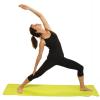
Pilates

Pilates (/pɪˈlɑːtɪz/; German: [piˈlaːtəs]) is a physical fitness system developed in the early 20th century by Joseph Pilates, after whom it was named. Pilates called his method "Contrology". It is practiced worldwide, and especially in western countries such as Canada, the United States and the United Kingdom. As of 2005, there were 11 million people practicing the discipline regularly and 14,000 instructors in the United States.

There is only limited evidence to support the use of Pilates to alleviate low back pain, or improve balance in elderly people. Evidence from studies show that while Pilates improves balance, limited data exists on whether this impacts on falls by the elderly.  Pilates has not been shown to be an effective treatment for any medical condition. There is some evidence regular Pilates sessions can help muscle conditioning in healthy adults, when compared to doing no exercise.

Brief description

In his book Return to Life through Contrology, Joseph Pilates presents his method as the art of controlled movements, which should look and feel like a workout (not a therapy) when properly manifested. If practiced with consistency, Pilates improves flexibility, builds strength and develops control and endurance in the entire body. It puts emphasis on alignment, breathing, developing a strong core, and improving coordination and balance. The core, consisting of the muscles of the abdomen, low back, and hips, is often called the "powerhouse" and is thought to be the key to a person's stability. Pilates' system allows for different exercises to be modified in range of difficulty from beginner to advanced or to any other level, and also in terms of the instructor and practitioner's specific goals and/or limitations. Intensity can be increased over time as the body adapts itself to the exercises.

History

Pilates was developed by Joseph Pilates, from Mönchengladbach, Germany. His father was a gymnast and his mother a naturopath.

During the first half of the twentieth century, he developed a system of exercises which were intended to strengthen the human mind and body. Pilates believed that mental and physical health were interrelated.

In his youth he had practised many of the physical training regimes available in Germany, and it was from these he developed his own method. It has clear connections with the physical culture of the late nineteenth century, such as the use of special apparatuses and claims that the exercises could cure ill health. It is also related to the tradition of "corrective exercise" or "medical gymnastics" as typified by Pehr Henrik Ling.

Pilates said that the inspiration for his method came to him during World War One, while he was being held at the Knockaloe internment camp on the Isle of Man. He developed his method there for four years, working on his fellow internees .

Joseph Pilates accompanied his method with a variety of equipment, for which he used the term "apparatus". Each apparatus was designed to help accelerate the process of stretching, strengthening, body alignment and increased core strength started by the mat work. The best-known and most popular apparatus today, the Reformer, was originally called the Universal Reformer, aptly named for "universally reforming the body". Eventually Pilates designed other apparatus, including the Cadillac, Wunda Chair, High "Electric" Chair, Spine Corrector, Ladder Barrel and Pedi-Pole.

Pilates published two books related to his training method: Your Health: A Corrective System of Exercising That Revolutionizes the Entire Field of Physical Education in 1934, and Return to Life Through Contrology in 1945.

His first students went on to teach his methods, including: Romana Kryzanowska, Kathy Grant, Jay Grimes, Ron Fletcher, Maja Wollman, Mary Bowen, Carola Treir, Bob Seed, Eve Gentry, Bruce King, Lolita San Miguel, and Mary Pilates, Joseph's niece. Contemporary Pilates includes both the "Modern" Pilates and the "Classical/Traditional" Pilates. Modern Pilates is partly derived from the teaching of some first generation students, while Classical Pilates aims to preserve the original work as Joseph Pilates taught it.


  • Modified Pilates as an adjunct to standard physiotherapy care for urinary incontinence: a mixed methods pilot for a randomised controlled trial. 📎

    facebook Share on Facebook
    Abstract Title:

    Modified Pilates as an adjunct to standard physiotherapy care for urinary incontinence: a mixed methods pilot for a randomised controlled trial.

    Abstract Source:

    BMC Womens Health. 2018 Jan 12 ;18(1):16. Epub 2018 Jan 12. PMID: 29329567

    Abstract Author(s):

    Adi Lausen, Louise Marsland, Samantha Head, Joanna Jackson, Berthold Lausen

    Article Affiliation:

    Adi Lausen

    Abstract:

    BACKGROUND:Urinary incontinence (UI) is a distressing condition affecting at least 5 million women in England and Wales. Traditionally, physiotherapy for UI comprises pelvic floor muscle training, but although evidence suggests this can be effective it is also recognised that benefits are often compromised by patient motivation and commitment. In addition, there is increasing recognition that physical symptoms alone are poor indicators of the impact of incontinence on individuals' lives. Consequently, more holistic approaches to the treatment of UI, such as Modified Pilates (MP) have been recommended. This study aimed to provide preliminary findings about the effectiveness of a 6-week course of MP classes as an adjunct to standard physiotherapy care for UI, and to test the feasibility of a randomised controlled trial (RCT) design.

    METHODS:The study design was a single centre pilot RCT, plus qualitative interviews. 73 women referred to Women's Health Physiotherapy Services for UI at Colchester Hospital University NHS Foundation Trust were randomly assigned to two groups: a 6-week course of MP classes in addition to standard physiotherapy care (intervention) or standard physiotherapy care only (control). Main outcome measures were self-reported UI, quality of life and self-esteem at baseline (T1), completion of treatment (T2), and 5 months after randomisation (T3). Qualitative interviews were conducted with a subgroup at T2 and T3. Due to the nature of the intervention blinding of participants, physiotherapists and researchers was not feasible.

    RESULTS:Post-intervention data revealed a range of benefits for women who attended MP classes and who had lower symptom severity at baseline: improved self-esteem (p = 0.032), decreased social embarrassment (p = 0.026) and lower impact on normal daily activities (p = 0.025). In contrast, women with higher symptom severity showed improvement in their personal relationships (p = 0.017). Qualitative analysis supported these findings and also indicated that MP classes could positively influence attitudes to exercise, diet and wellbeing.

    CONCLUSIONS:A definitive RCT is feasible but will require a large sample size to inform clinical practice.

    TRIAL REGISTRATION:ISRCTN74075972 Registered 12/12/12 (Retrospectively registered).

  • Pilates

    facebook Share on Facebook

    Pilates (/pɪˈlɑːtɪz/; German: [piˈlaːtəs]) is a physical fitness system developed in the early 20th century by Joseph Pilates, after whom it was named. Pilates called his method "Contrology". It is practiced worldwide, and especially in western countries such as Canada, the United States and the United Kingdom. As of 2005, there were 11 million people practicing the discipline regularly and 14,000 instructors in the United States.

    There is only limited evidence to support the use of Pilates to alleviate low back pain, or improve balance in elderly people. Evidence from studies show that while Pilates improves balance, limited data exists on whether this impacts on falls by the elderly.  Pilates has not been shown to be an effective treatment for any medical condition. There is some evidence regular Pilates sessions can help muscle conditioning in healthy adults, when compared to doing no exercise.

  • Pilates

  • Pilates and aerobic training improve levels of depression, anxiety and quality of life in overweight and obese individuals. 📎

    facebook Share on Facebook
    Abstract Title:

    Pilates and aerobic training improve levels of depression, anxiety and quality of life in overweight and obese individuals.

    Abstract Source:

    Arq Neuropsiquiatr. 2017 Dec ;75(12):850-857. PMID: 29236887

    Abstract Author(s):

    Rodrigo Luiz Vancini, Angeles Bonal Rosell Rayes, Claudio Andre Barbosa de Lira, Karine Jacon Sarro, Marilia Santos Andrade

    Article Affiliation:

    Rodrigo Luiz Vancini

    Abstract:

    OBJECTIVE:To compare the effects of Pilates and walking on quality of life, depression, and anxiety levels.

    METHODS:Sixty-three overweight/obese participants were randomly divided into: control (n = 20), walking (n = 21), and Pilates (n = 22) groups. Pilates and walking groups attended eight weeks of 60-minute exercise sessions three times per week. Quality of life, depression, and state- and trait-anxiety levels were evaluated before and after eight weeks of training.

    RESULTS:Scores of quality of life, depression, and trait-anxiety improved in the Pilates and walking groups. State-anxiety levels improved only in the walking group.

    CONCLUSION:Pilates and walking positively impact quality of life, depression and anxiety. The Pilates method could be used as an alternative to improve mood disorders in overweight/obese individuals.

  • Pilates for improvement of muscle endurance, flexibility, balance, and posture.

    facebook Share on Facebook
    Abstract Title:

    Pilates for improvement of muscle endurance, flexibility, balance, and posture.

    Abstract Source:

    J Strength Cond Res. 2010 Mar;24(3):661-7. PMID: 20145572

    Abstract Author(s):

    June A Kloubec

    Article Affiliation:

    Department of Health and Exercise Science, Gustavus Adolphus College, St. Peter, Minnesota, USA. This email address is being protected from spambots. You need JavaScript enabled to view it.

    Abstract:

    Many claims have been made about the effectiveness of Pilates exercise on the basic parameters of fitness. The purpose of this study was to determine the effects of Pilates exercise on abdominal endurance, hamstring flexibility, upper-body muscular endurance, posture, and balance. Fifty subjects were recruited to participate in a 12-week Pilates class, which met for 1 hour 2 times per week. Subjects were randomly assigned to either the experimental (n = 25) or control group (n = 25). Subjects performed the essential (basic) mat routine consisting of approximately 25 separate exercises focusing on muscular endurance and flexibility of the abdomen, low back, and hips each class session. At the end of the 12-week period, a 1-way analysis of covariance showed a significant level of improvement (p

  • Pilates increases the isokinetic muscular strength of the knee extensors and flexors in elderly women.

    facebook Share on Facebook
    Abstract Title:

    Pilates increases the isokinetic muscular strength of the knee extensors and flexors in elderly women.

    Abstract Source:

    J Bodyw Mov Ther. 2017 Oct ;21(4):815-822. Epub 2017 Jan 8. PMID: 29037633

    Abstract Author(s):

    Laís Campos Oliveira, Raphael Gonçalves Oliveira, Deise Aparecida de Almeida Pires-Oliveira

    Article Affiliation:

    Laís Campos Oliveira

    Abstract:

    INTRODUCTION:Pilates has been shown to be effective for increasing muscle strength in older adults, however, some variables have not yet been explored.

    OBJECTIVE:Investigate the effects of Pilates on the isokinetic muscular strength of the knee extensors and flexors at 60°/s, in elderly women.

    METHOD:Thirty-two women were randomized into two groups: control group (CG, n = 16, age = 64.2 ± 0.8 years; BMI = 25.0 ± 1.2 kg/m), and experimental group (EG, n = 16, age = 63.6 ± 1.0 years, BMI = 24.7 ± 1.3 kg/m). Isokinetic evaluation of the knee extensor and flexor muscles was performed at 60°/s, pre- and post-intervention, considering the peak torque (N.m) and total work (J) for the right and left lower limbs. The CG participated in static stretching and the EG in Pilates sessions, twice a week for 12 weeks.

    RESULTS:The results demonstrated that the EG presented a significant improvement (p < 0.01) in all tests performed, when comparing the pre- and post-intervention (intragroup), with an effect size (Cohen's d) reaching 2.03 and 1.33 for the knee flexor and extensor muscles respectively. Comparing the CG and EG (intergroup), post-intervention, a significant improvement was observed (p ≤ 0.01) in favor of the EG for all variables, with an effect size (Cohen's d) reaching 1.59 and 1.15 for the knee flexor and extensor muscles respectively.

    CONCLUSION:The results indicated that 12 weeks of Pilates increases the isokinetic muscular strength of the knee extensors and flexors in elderly women and can be considered for this purpose when prescribing physical exercise programs.

  • Pilates method in personal autonomy, static balance and quality of life of elderly females.

    facebook Share on Facebook
    Abstract Title:

    Pilates method in personal autonomy, static balance and quality of life of elderly females.

    Abstract Source:

    J Bodyw Mov Ther. 2010 Apr;14(2):195-202. Epub 2010 Jan 29. PMID: 20226367

    Abstract Author(s):

    Brena Guedes de Siqueira Rodrigues, Samaria Ali Cader, Natáli Valim Oliver Bento Torres, Ediléa Monteiro de Oliveira, Estélio Henrique Martin Dantas

    Article Affiliation:

    PROCIMH - Universidade Castelo Branco, RJ, Brasil. This email address is being protected from spambots. You need JavaScript enabled to view it.

    Abstract:

    OBJECTIVE: The aim of this study was to evaluate the effects of the Pilates method on the personal autonomy, static balance and quality of life in healthy elderly females. METHOD: Fifty-two elderly females were selected and submitted to evaluation protocols to assess functional autonomy (GDLAM), static balance (Tinetti) and quality of life (WHOQOL-OLD). The Pilates group (PG: n=27) participated in Pilates exercises twice weekly for eight weeks. Descriptive statistics were compiled using the Shapiro-Wilk test. The level of significance was considered to be p

  • Pilates workouts can reduce pain in pregnant women.

    facebook Share on Facebook
    Abstract Title:

    Pilates workouts can reduce pain in pregnant women.

    Abstract Source:

    Complement Ther Clin Pract. 2017 Nov 16. Epub 2017 Nov 16. PMID: 29173892

    Abstract Author(s):

    Ika Oktaviani

    Article Affiliation:

    Ika Oktaviani

    Abstract:

    OBJECTIVE:This study aims to evaluate the effects of Pilates exercises for a decreasing pain in pregnant women.

    METHODS:A total of 40 pregnant women were divided into two groups, a control group (followed a standard pregnancy exercise regimen) and a Pilates group (completed a Pilates exercise regimen). A pain assessment was carried out after exercise, using a visual analog scale. The Pilates group workout program lasted 70-80 min per day, once a week, for 8 weeks.

    RESULTS:The reduction in the level of pain was found to be significantly greater in the group of pregnant women who completed the Pilates workout (p < 0.05).

    CONCLUSIONS:The results of this study indicated that Pilates is an effective, healthy, and feasible method of reducing pain in pregnancy, and is therefore a beneficial alternative workout for the suppression of pain in the third trimester of pregnancy.

  • Pilates-based therapeutic exercise: effect on subjects with nonspecific chronic low back pain and functional disability: a randomized controlled trial. 📎

    facebook Share on Facebook
    Abstract Title:

    Pilates-based therapeutic exercise: effect on subjects with nonspecific chronic low back pain and functional disability: a randomized controlled trial.

    Abstract Source:

    J Orthop Sports Phys Ther. 2006 Jul;36(7):472-84. PMID: 16881464

    Abstract Author(s):

    Rochenda Rydeard, Andrew Leger, Drew Smith

    Abstract:

    STUDY DESIGN: A randomized controlled trial, prestest-posttest design, with a 3-, 6-, and 12-month follow-up. OBJECTIVES: To investigate the efficacy of a therapeutic exercise approach in a population with chronic low back pain (LBP). BACKGROUND: Therapeutic approaches developed from the Pilates method are becoming increasingly popular; however, there have been no reports on their efficacy. METHODS AND MEASURES: Thirty-nine physically active subjects between 20 and 55 years old with chronic LBP were randomly assigned to 1 of 2 groups. The specific-exercise-training group participated in a 4-week program consisting of training on specialized (Pilates) exercise equipment, while the control group received the usual care, defined as consultation with a physician and other specialists and healthcare professionals, as necessary. Treatment sessions were designed to train the activation of specific muscles thought to stabilize the lumbar-pelvic region. Functional disability outcomes were measured with The Roland Morris Disability Questionnaire (RMQ/RMDQ-HK) and average pain intensity using a 101-point numerical rating scale. RESULTS: There was a significantly lower level of functional disability (P = .023) and average pain intensity (P = .002) in the specific-exercise-training group than in the control group following the treatment intervention period. The posttest adjusted mean in functional disability level in the specific-exercise-training group was 2.0 (95% CI, 1.3 to 2.7) RMQ/RMDQ-HK points compared to a posttest adjusted mean in the control group of 3.2 (95% CI, 2.5 to 4.0) RMQ/RMDQ-HK points. The posttest adjusted mean in pain intensity in the specific-exercise-training group was 18.3 (95% CI, 11.8 to 24.8), as compared to 33.9 (95% CI, 26.9 to 41.0) in the control group. Improved disability scores in the specific-exercise-training group were maintained for up to 12 months following treatment intervention. CONCLUSIONS: The individuals in the specific-exercise-training group reported a significant decrease in LBP and disability, which was maintained over a 12-month follow-up period. Treatment with a modified Pilates-based approach was more efficacious than usual care in a population with chronic, unresolved LBP.

  • Sagittal spinal posture after Pilates-based exercise in healthy older adults.

    facebook Share on Facebook
    Abstract Title:

    Sagittal spinal posture after Pilates-based exercise in healthy older adults.

    Abstract Source:

    Spine (Phila Pa 1976). 2009 May 1;34(10):1046-51. PMID: 19404180

    Abstract Author(s):

    Yi-Liang Kuo, Elizabeth A Tully, Mary P Galea

    Abstract:

    STUDY DESIGN: Longitudinal, repeated-measures study. OBJECTIVE: The aim of this study was to determine changes in sagittal spinal posture in older adults during standing and sitting after a Pilates-based exercise program. SUMMARY OF BACKGROUND DATA: Pilates exercise is purported to improve posture, however, few peer-reviewed articles are available to provide scientific support. Most previous studies were conducted in young dancers, and the effect of Pilates exercise on spinal posture in older adults remained unclear. METHODS: Thirty-four healthy older adults aged over 60 years volunteered for this study. A two-dimensional PEAK Motus motion analysis system was used to measure sagittal spinal angles. Participants were tested on 2 occasions before the exercise program to establish a baseline measure, and undertook a supervised Pilates-based exercise program twice weekly for 10 weeks. Participants were tested on another 2 occasions, immediately after the exercise program, and after a short-term follow-up. RESULTS: Baseline measures in both standing and sitting postures remained unchanged except for the lumbar spine angle in sitting. Immediately after the Pilates-based exercise program, older adults stood with slightly decreased thoracic flexion and sat with slightly increased lumbar extension. No significant differences were found during the follow-up period. CONCLUSION: The individually designed Pilates-based exercise program was feasible for healthy older adults, and the high attendance rate supports the suitability of the exercise program over a long period. Considering the variability of the baseline measure, small improvement was only observed in the thoracic kyphosis during standing. The long-term effect of Pilates exercise requires further investigation.

  • Six weeks of Mat Pilates training are enough to improve functional capacity in elderly women.

    facebook Share on Facebook
    Abstract Title:

    Six weeks of Mat Pilates training are enough to improve functional capacity in elderly women.

    Abstract Source:

    J Bodyw Mov Ther. 2017 Oct ;21(4):1003-1008. Epub 2016 Dec 3. PMID: 29037615

    Abstract Author(s):

    Josefina Bertoli, Grazieli Maria Biduski, Cíntia de la Rocha Freitas

    Article Affiliation:

    Josefina Bertoli

    Abstract:

    The aim of the study was to evaluate the effect of Mat Pilates on the functional capacity (FC) of elderly women before and after six weeks of intervention. Eighteen women aged 62.28 (±2.34) participated in the study. Timed Up and Go test, Timed Up Stairs, Timed Down Stairs, 30-s Chair Stand, Chair Sit-and-Reach and Back Scratch tests were assessed. The results showed significant improvements in all FC tests after six weeks of the Mat Pilates intervention. Summarizing, only sixweeks of Mat Pilates training of 60 min per session, three times a week, three series beginning with six repetitions and eight repetitions at the last two weeks of intervention, were enough to improve FC in elderly women. Furthermore, the exercises difficulty increased from beginners to intermediate.

  • The effects of a Pilates training program on arm-trunk posture and movement.

    facebook Share on Facebook
    Abstract Title:

    The effects of a Pilates training program on arm-trunk posture and movement.

    Abstract Source:

    J Nutr Sci Vitaminol (Tokyo). 2008 Feb;54(1):95-8. PMID: 19879677

    Abstract Author(s):

    Kim Emery, Sophie J De Serres, Ann McMillan, Julie N Côté

    Article Affiliation:

    Department of Kinesiology and Physical Education, McGill University, 475 Pine Avenue West, Montreal, Quebec, Canada.

    Abstract:

    BACKGROUND: Shoulder biomechanics and spine alignment have been found to be related to occasional and/or chronic neck-shoulder pain. Pilates is a physical training approach that focuses on posture, flexibility, segmental alignment and core control, through posture and movement exercises. The objectives of this study were to determine the effect of a Pilates training program on arm-trunk posture, strength, flexibility and biomechanical patterns during a functional shoulder flexion task. METHODS: Nineteen subjects (9 controls, 10 experimental) were assessed twice, 12 weeks apart, during which the experimental group was submitted to a Pilates training program (two 1-h sessions per week). The assessment consisted of trials of seated posture, abdominal strength, shoulder range of motion, and maximal shoulder flexion, during which neck, shoulder and trunk kinematics and the activity of 16 muscles were recorded. FINDINGS: After training, subjects showed smaller static thoracic kyphosis during quiet sitting and greater abdominal strength. The experimental group also showed reduced posterior and mediolateral scapular displacements, upper thoracic extension and lumbar lateral flexion, as well as higher activity of the ipsilateral cervical erector spinae, contralateral rhomboid muscles and lower activity of the ipsilateral lumbar erector spinae during the shoulder flexion task. INTERPRETATION: The Pilates training program was effective in improving abdominal strength and upper spine posture as well as in stabilizing core posture as shoulder flexion movements were performed. Since deficits in these functional aspects have previously been associated with symptoms in the neck-shoulder region, our results support the use of Pilates in the prevention of neck-shoulder disorders.

  • The effects of Clinical Pilates exercises on patients with shoulder pain: A randomised clinical trial.

    facebook Share on Facebook
    Abstract Title:

    The effects of Clinical Pilates exercises on patients with shoulder pain: A randomised clinical trial.

    Abstract Source:

    J Bodyw Mov Ther. 2017 Oct ;21(4):847-851. Epub 2017 Mar 4. PMID: 29037638

    Abstract Author(s):

    Esra Atılgan, Aydan Aytar, Aslıcan Çağlar, Ayça Aytar Tığlı, Gamze Arın, Gökmen Yapalı, Pınar Kısacık, Utku Berberoğlu, Hülya Özlem Şener, Edibe Ünal

    Article Affiliation:

    Esra Atılgan

    Abstract:

    AIM:The purpose of this study was to determine the effect of Clinical Pilates exercises on patients with shoulder pain.

    MATERIAL AND METHODS:Thirty-three patients, experiencing shoulder pain continuously for at least four weeks were selected as study subjects. The patients were randomly divided into two groups, namely Clinical Pilates exercise (n = 17) group and conventional exercise (n = 16) group. The patients were treated for five days a week, the total treatment being carried out for 10 days. The assessment of pain and disability amongst the patients were done at the baseline and at the end of the treatment sessions, using Visual Analogue Scale (VAS) and Shoulder Pain and Disability Index (SPADI).

    RESULTS:The clinical Pilates exercise group showed a significant improvement in all scores used for assessment (p < 0.05), while the conventional exercise group demonstrated a significant improvement only in the SPADI total score (p < 0.05). A comparison of scores for the VAS, SPADI-Pain and SPADI-Total between the two groups, revealed a significant improvement in the Clinical Pilates exercise group (p < 0.05).

    CONCLUSION:It was demonstrated by the study that Clinical Pilates exercise is an efficient technique for patients experiencing shoulder pain, as it helps reduce pain and disability among them.

  • The effects of Mat Pilates and Reformer Pilates in patients with Multiple Sclerosis: A randomized controlled study.

    facebook Share on Facebook
    Abstract Title:

    The effects of Mat Pilates and Reformer Pilates in patients with Multiple Sclerosis: A randomized controlled study.

    Abstract Source:

    NeuroRehabilitation. 2017 ;41(2):413-422. PMID: 28946576

    Abstract Author(s):

    I Bulguroglu, A Guclu-Gunduz, G Yazici, C Ozkul, C Irkec, B Nazliel, H Z Batur-Caglayan

    Article Affiliation:

    I Bulguroglu

    Abstract:

    BACKGROUND:Pilates is an exercise method which increases strength and endurance of core muscles and improves flexibility, dynamic postural control and balance.

    OBJECTIVE:To analyze and compare the effects of Mat and Reformer Pilates methods in Patients with Multiple Sclerosis (MS).

    METHODS:Thirty-eight patients with MS were included in the study. Participants were randomly divided into 3 groups as Mat Pilates, Reformer Pilates and control groups. The subjects in the Pilates groups did Mat or Reformer Pilates for 8 weeks, 2 days a week. The control group did breathing and relaxation exercises at home. Balance, functional mobility, core stability, fatigue severity and quality of life were evaluated.

    RESULTS:Balance, functional mobility, core stability, fatigue severity and quality of life improved after Pilates in Mat and Reformer Pilates groups (p < 0.05). On the other hand, we could not find any changing in the control group (p > 0.05). When the gain obtained in the Pilates groups is compared, it has been observed that progress has been more in trunk flexor muscle strength in the Reformer Pilates group (p < 0.05) and that the gain has been similar in the other parameters (p > 0.05).

    CONCLUSIONS:As a result, patients with MS have seen similar benefits in Reformer Pilates and Mat Pilates methods.

  • Two different techniques in the rehabilitation treatment of low back pain: a randomized controlled trial. 📎

    facebook Share on Facebook
    Abstract Title:

    Two different techniques in the rehabilitation treatment of low back pain: a randomized controlled trial.

    Abstract Source:

    Eura Medicophys. 2006 Sep;42(3):205-10. PMID: 17039216

    Abstract Author(s):

    S Donzelli, E Di Domenica, A M Cova, R Galletti, N Giunta

    Article Affiliation:

    Department of Physical Medicine and Rehabilitation, G. Pini Orthopedic Institute, via S. Pellico 43, 20021 Bollate, Milan, Italy.

    Abstract:

    AIM: The Back School is a widely accepted and effective method for treating low back pain, whereas no scientific evidence exists about the effects of the Pilates CovaTech method. With this study we wanted to evaluate the efficacy of this new method in patients with low back pain. METHODS: Fifty-three patients with at least 3 months of nonspecific low back pain were entered into a Pilates therapy or a Back School treatment group, 43 of which completed the study. Small exercise groups of 7 patients each followed a daily kinesitherapy protocol for 10 days. Evaluations were performed at the start of the study and then at 1, 3 and 6 months after the beginning of treatment. We used the Oswestry Low Back Pain Disability Scale (OLBPDQ) to assess disability and the visual analog scale (VAS) to evaluate pain. RESULTS: Demographic and baseline clinical characteristics were similar for both groups. A significant reduction in pain intensity and disability was observed across the entire sample. The Pilates method group showed better compliance and subjective response to treatment. CONCLUSIONS: The results obtained with the Pilates method were comparable to those achieved with the Back School method, suggesting its use as an alternative approach to the treatment of non specific low back pain.

We use cookies on our website. Some of them are essential for the operation of the site, while others help us to improve this site and the user experience (tracking cookies). You can decide for yourself whether you want to allow cookies or not. Please note that if you reject them, you may not be able to use all the functionalities of the site.