CYBERMED LIFE - ORGANIC  & NATURAL LIVING
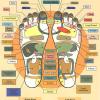
Reflexology

Reflexology is the application of appropriate pressure to specific points and areas on the feet, hands, or ears. Reflexologists believe that these reflex points correspond to different body organs and systems, and that pressing them creates real benefits for the person's health.

For example, reflexology holds that a specific spot in the arch of the foot corresponds to the bladder. When a reflexologist uses thumbs or fingers to apply appropriate pressure to this area, it may affect bladder functioning.
  • A pilot study exploring the effects of reflexology on cold intolerance. 📎

    facebook Share on Facebook
    Abstract Title:

    A pilot study exploring the effects of reflexology on cold intolerance.

    Abstract Source:

    J Cardiovasc Pharmacol. 2010 Apr;55(4):377-84. PMID: 20633515

    Abstract Author(s):

    Wenping Zhang, Shougo Takahashi, Takashi Miki, Hisayo Fujieda, Torao Ishida

    Article Affiliation:

    Department of Acupuncture, Institute of Traditional Chinese Medicine, Suzuka University of Medical Science, Mie, Japan.

    Abstract:

    Cold intolerance is an inability to tolerate cold temperatures and is accompanied by symptoms including headache, shoulder discomfort, dizziness and palpitations. The current study was performed to examine whether reflexology therapy affected cold intolerance in human subjects and whether the treatment was systemically effective. Ten female volunteer examinees with subjective feelings of cold were examined. After a 5-minute foot bath, 10 minutes of reflexology therapy was performed on their left foot. Skin temperature and blood flow were estimated before and after treatment, together with an interview concerning their feelings of cold and daily habits. In addition, how the recovery rate was affected by the application of a chilled-water load was also estimated. Along with significant increases in skin temperature and blood flow compared with pre-treatment at the bilateral points of KI-1, LR-3, and BL-60, a faster recovery after the application of the chilled-water load was also seen in the lower limbs on both sides. From these results, we conclude that reflexology has systemic effects and is an alternative method for treating cold intolerance.

  • A pilot study exploring the effects of reflexology on cold intolerance. 📎

    facebook Share on Facebook
    Abstract Title:

    A pilot study exploring the effects of reflexology on cold intolerance.

    Abstract Source:

    J Cardiovasc Pharmacol. 2010 Apr;55(4):377-84. PMID: 20633515

    Abstract Author(s):

    Wenping Zhang, Shougo Takahashi, Takashi Miki, Hisayo Fujieda, Torao Ishida

    Article Affiliation:

    Department of Acupuncture, Institute of Traditional Chinese Medicine, Suzuka University of Medical Science, Mie, Japan.

    Abstract:

    Cold intolerance is an inability to tolerate cold temperatures and is accompanied by symptoms including headache, shoulder discomfort, dizziness and palpitations. The current study was performed to examine whether reflexology therapy affected cold intolerance in human subjects and whether the treatment was systemically effective. Ten female volunteer examinees with subjective feelings of cold were examined. After a 5-minute foot bath, 10 minutes of reflexology therapy was performed on their left foot. Skin temperature and blood flow were estimated before and after treatment, together with an interview concerning their feelings of cold and daily habits. In addition, how the recovery rate was affected by the application of a chilled-water load was also estimated. Along with significant increases in skin temperature and blood flow compared with pre-treatment at the bilateral points of KI-1, LR-3, and BL-60, a faster recovery after the application of the chilled-water load was also seen in the lower limbs on both sides. From these results, we conclude that reflexology has systemic effects and is an alternative method for treating cold intolerance.

  • A randomised-controlled trail examining the effects of reflexology of patients with chronic obstructive pulmonary disease (COPD).

    facebook Share on Facebook
    Abstract Title:

    A randomised-controlled trail examining the effects of reflexology of patients with chronic obstructive pulmonary disease (COPD).

    Abstract Source:

    Complement Ther Clin Pract. 2006 May;12(2):141-7. Epub 2005 Dec 27. PMID: 16648092

    Abstract Author(s):

    Iain S A Wilkinson, Samantha Prigmore, Charlotte F Rayner

    Abstract:

    It is known that many patients with obstructive pulmonary diseases use a number of complementary and alternative medicines (CAM). There has been a great deal of interest into the CAM recently, with the House of Lords select committee for science and technology's report suggesting randomised-controlled trials are the best means of researching the area. There is very little research into the effects of reflexology specifically on the effects it has on COPD. As such a randomised-controlled trial was set up to examine the effects of reflexology treatments on COPD. Results were qualitative and quantitative and showed that there are a number of areas of possible benefit for patients with COPD, but a larger scale study with a longer time frame is needed for a full evaluation of these effects.

  • Acupuncture and Reflexology for Chemotherapy-Induced Peripheral Neuropathy in Breast Cancer. 📎

    facebook Share on Facebook
    Abstract Title:

    Acupuncture and Reflexology for Chemotherapy-Induced Peripheral Neuropathy in Breast Cancer.

    Abstract Source:

    Integr Cancer Ther. 2017 09 ;16(3):258-262. Epub 2017 Feb 2. PMID: 28150504

    Abstract Author(s):

    Idan Ben-Horin, Peretz Kahan, Larisa Ryvo, Moshe Inbar, Shahar Lev-Ari, Ravit Geva

    Article Affiliation:

    Idan Ben-Horin

    Abstract:

    BACKGROUND:Treatment of chemotherapy-induced peripheral neuropathy (CIPN), which affects approximately 30% to 40% of patients treated with neuropathy-causing agents, is mainly symptomatic. Currently available interventions are of little benefit.

    STUDY DESIGN:This study was conducted as a retrospective analysis of the efficacy of acupuncture and reflexology in alleviating CIPN in breast cancer patients.

    METHODS:Medical records of 30 consecutive breast cancer patients who received both chemotherapy and treatment for CIPN according to our Acupuncture and Reflexology Treatment for Neuropathy (ART-N) protocol between 2011 and 2012 were reviewed. Symptom severity was rated at baseline, during, and after treatment.

    RESULTS:The records of 30 breast cancer patients who had been concomitantly treated with chemotherapy and ART-N for CIPN were retrieved. Two records were incomplete, leaving a total of 28 patients who were enrolled into the study. Twenty patients (71%) had sensory neuropathy, 7 (25%) had motor neuropathy, and 1 (4%) had both sensory and motor neuropathy. Only 2 (10%) of the 20 patients with grades 1 to 2 neuropathy still reported symptoms at 12 months since starting the ART-N protocol. All 8 patients who presented with grades 3 to 4 neuropathy were symptom-free at the 12-month evaluation. Overall, 26 patients (93%) had complete resolution of CIPN symptoms.

    CONCLUSION:The results of this study demonstrated that a joint protocol of acupuncture and reflexology has a potential to improve symptoms of CIPN in breast cancer patients. The protocol should be validated on a larger cohort with a control group. It also warrants testing as a preventive intervention.

  • Comparison of the Effects of Hand Reflexology versus Acupressure on Anxiety and Vital Signs in Female Patients with Coronary Artery Diseases. 📎

    facebook Share on Facebook
    Abstract Title:

    Comparison of the Effects of Hand Reflexology versus Acupressure on Anxiety and Vital Signs in Female Patients with Coronary Artery Diseases.

    Abstract Source:

    Healthcare (Basel). 2019 Feb 11 ;7(1). Epub 2019 Feb 11. PMID: 30754687

    Abstract Author(s):

    Zohre Rahmani Vasokolaei, Nahid Rejeh, Majideh Heravi-Karimooi, Seyed Davood Tadrisi, Kiarash Saatchi, Zahra Poshtchaman, Christina Sieloff, Mojtaba Vaismoradi

    Article Affiliation:

    Zohre Rahmani Vasokolaei

    Abstract:

    Hospitalization in the cardiac care unit can increase anxiety in patients. This study aimed to compare hand reflexology versus acupressure on anxiety and vital signs in female patients with coronary artery diseases. This double-blinded randomized placebo-controlled trial with a pre- and post-intervention design was conducted on 135 female patients with coronary artery diseases. Female patients hospitalized in a cardiac care unit were randomly divided into three groups of hand reflexology, acupressure and placebo (= 45 patients in each group) using blocking and a table of random numbers. Data was collected using the Spielberger anxiety inventory. Also, their vital signs were measured before, immediately after and half an hour after the intervention. Data analysis was performed using descriptive and analytical statistics. Before the intervention, there was no statistically significant difference in anxiety levels between the groups (>0.05). Also, the effects of hand reflexology and acupressure immediately and half an hour later on the reduction of anxiety and vital signs were equal (<0.05). Implementation of hand reflexology and acupressure can have positive effects on anxiety and vital signs in patients with coronary artery diseases. They can reduce patients' anxiety with an equal effectiveness.

  • Determination of efficacy of reflexology in managing patients with diabetic neuropathy: a randomized controlled clinical trial. 📎

    facebook Share on Facebook
    Abstract Title:

    Determination of efficacy of reflexology in managing patients with diabetic neuropathy: a randomized controlled clinical trial.

    Abstract Source:

    Evid Based Complement Alternat Med. 2014 ;2014:843036. Epub 2014 Jan 9. PMID: 24527055

    Abstract Author(s):

    Krishna Dalal, V Bharathi Maran, Ravindra M Pandey, Manjari Tripathi

    Article Affiliation:

    Krishna Dalal

    Abstract:

    Background. The restricted usage of existing pharmacological methods which do not seem to provide the treatment of diabetic neuropathy may lead to exploring the efficacy of a complementary therapy. In this context, this paper was devoted to evaluate the efficacy of foot reflexology. This health science works on the hypothesis that the dysfunctional states of body parts could be identified by observing certain skin features and be rectified by stimulating certain specific areas mapped on feet. Method. Subjects (N = 58) with diagnosed diabetic neuropathy were randomly distributed into reflexology and control groups in which both group patients were treated with ongoing pharmacological drugs. Reflexology group patients were additionally treated holistically with the hypothesis that this therapy would bring homeostasis among body organ functions. This was a caregiver-based study with a follow-up period of 6 months. The outcome measures were pain reduction, glycemic control, nerve conductivity, and thermal and vibration sensitivities. The skin features leading to the detection of the abnormal functional states of body parts were also recorded and analyzed. Results. Reflexology group showed more improvements in all outcome measures than those of control subjects with statistical significance. Conclusion. This study exhibited the efficient utility of reflexology therapy integrated with conventional medicines in managing diabetic neuropathy.

  • Randomised controlled trial of the effectiveness of using foot reflexology to improve quality of sleep amongst Taiwanese postpartum women.

    facebook Share on Facebook
    Abstract Title:

    Randomised controlled trial of the effectiveness of using foot reflexology to improve quality of sleep amongst Taiwanese postpartum women.

    Abstract Source:

    Midwifery. 2009 Jul 3. PMID: 19577829

    Abstract Author(s):

    Chia-Yen Li, Su-Chiu Chen, Chung-Yi Li, Meei-Ling Gau, Chiu-Mieh Huang

    Abstract:

    OBJECTIVE: to examine the effectiveness of using foot reflexology to improve sleep quality in postpartum women. DESIGN AND SETTING: randomised controlled trial, conducted at two postpartum centres in northern Taiwan. PARTICIPANTS: 65 postpartum women reporting poor quality of sleep were recruited from July 2007 to December 2007. INTERVENTIONS: participants were assigned randomly to either an intervention or a control group. Participants in both groups received the same care except for reflexology therapy. The intervention group received a single 30-minute foot reflexology session at the same time each evening for five consecutive days. Sessions were administered by a certified nurse reflexologist. MEASURES AND FINDINGS: the outcome measure was the Pittsburgh sleep quality index (PSQI), and this was performed at baseline and post test. Mean PQSI scores for both groups declined over time between baseline and post test. Using a generalised estimation equation to control several confounding variables, the changes in mean PSQI were found to be significantly lower in the intervention group (beta=-2.24, standard error=0.38, p<0.001) than in the control group. CONCLUSION: an intervention involving foot reflexology in the postnatal period significantly improved the quality of sleep. IMPLICATIONS FOR PRACTICE: midwives should evaluate maternal sleep quality and design early intervention programmes to improve quality of sleep in order to increase maternal biopsychosocial well-being. Midwives interested in complementary therapies should be encouraged to obtain training in reflexology and to apply it in clinical settings if it is allowed.

  • Randomized controlled trial of foot reflexology for patients with symptomatic idiopathic detrusor overactivity.

    facebook Share on Facebook
    Abstract Title:

    Randomized controlled trial of foot reflexology for patients with symptomatic idiopathic detrusor overactivity.

    Abstract Source:

    Int Urogynecol J Pelvic Floor Dysfunct. 2007 Jun;18(6):653-8. Epub 2006 Sep 27. PMID: 17003953

    Abstract Author(s):

    Ho-Leung Jimmy Mak, Willy Cecilia Cheon, To Wong, Yu Sun John Liu, Wai Mei Anny Tong

    Article Affiliation:

    Department of Obstetrics and Gynaecology, Queen Elizabeth Hospital, Hong Kong, China. This email address is being protected from spambots. You need JavaScript enabled to view it.

    Abstract:

    The aim of this study was to examine whether foot reflexology has beneficial effects on patients with idiopathic detrusor overactivity. One hundred and nine women with symptomatic idiopathic detrusor overactivity were randomized into either foot reflexology treatment group or nonspecific foot massage control group. The primary outcome measure was the change in the diurnal micturition frequency. There was significant change in the number of daytime frequency in the reflexology group when compared with the massage group (-1.90 vs -0.55, p = 0.029). There was also a decrease in the 24-h micturition frequency in both groups, but the change was not statistically significant (-2.80 vs -1.04 p = 0.055). In the reflexology group, more patients believed to have received "true" reflexology (88.9 vs 67.4%, p = 0.012). This reflects the difficulty of blinding in trials of reflexology. Larger scale studies with a better-designed control group and an improved blinding are required to examine if reflexology is effective in improving patients' overall outcome.

  • Randomized controlled trial of foot reflexology for patients with symptomatic idiopathic detrusor overactivity.

    facebook Share on Facebook
    Abstract Title:

    Randomized controlled trial of foot reflexology for patients with symptomatic idiopathic detrusor overactivity.

    Abstract Source:

    Int Urogynecol J Pelvic Floor Dysfunct. 2007 Jun;18(6):653-8. Epub 2006 Sep 27. PMID: 17003953

    Abstract Author(s):

    Ho-Leung Jimmy Mak, Willy Cecilia Cheon, To Wong, Yu Sun John Liu, Wai Mei Anny Tong

    Article Affiliation:

    Department of Obstetrics and Gynaecology, Queen Elizabeth Hospital, Hong Kong, China. This email address is being protected from spambots. You need JavaScript enabled to view it.

    Abstract:

    The aim of this study was to examine whether foot reflexology has beneficial effects on patients with idiopathic detrusor overactivity. One hundred and nine women with symptomatic idiopathic detrusor overactivity were randomized into either foot reflexology treatment group or nonspecific foot massage control group. The primary outcome measure was the change in the diurnal micturition frequency. There was significant change in the number of daytime frequency in the reflexology group when compared with the massage group (-1.90 vs -0.55, p = 0.029). There was also a decrease in the 24-h micturition frequency in both groups, but the change was not statistically significant (-2.80 vs -1.04 p = 0.055). In the reflexology group, more patients believed to have received "true" reflexology (88.9 vs 67.4%, p = 0.012). This reflects the difficulty of blinding in trials of reflexology. Larger scale studies with a better-designed control group and an improved blinding are required to examine if reflexology is effective in improving patients' overall outcome.

  • Reflexology

  • Reflexology

    facebook Share on Facebook

    Reflexology is the application of appropriate pressure to specific points and areas on the feet, hands, or ears. Reflexologists believe that these reflex points correspond to different body organs and systems, and that pressing them creates real benefits for the person's health.

    For example, reflexology holds that a specific spot in the arch of the foot corresponds to the bladder. When a reflexologist uses thumbs or fingers to apply appropriate pressure to this area, it may affect bladder functioning.

  • The Effects of Aromatherapy Massage and Reflexology on Pain and Fatigue in Patients with Rheumatoid Arthritis: A Randomized Controlled Trial.

    facebook Share on Facebook
    Abstract Title:

    The Effects of Aromatherapy Massage and Reflexology on Pain and Fatigue in Patients with Rheumatoid Arthritis: A Randomized Controlled Trial.

    Abstract Source:

    Pain Manag Nurs. 2016 Apr ;17(2):140-9. Epub 2016 Apr 16. PMID: 27091583

    Abstract Author(s):

    Zehra Gok Metin, Leyla Ozdemir

    Article Affiliation:

    Zehra Gok Metin

    Abstract:

    Nonpharmacologic interventions for symptom management in patients with rheumatoid arthritis are underinvestigated. Limited data suggest that aromatherapy massage and reflexology may help to reduce pain and fatigue in patients with rheumatoid arthritis. The aim of this study was to examine and compare the effects of aromatherapy massage and reflexology on pain and fatigue in patients with rheumatoid arthritis. The study sample was randomly assigned to either an aromatherapy massage (n = 17), reflexology (n = 17) or the control group (n = 17). Aromatherapy massage was applied to both knees of subjects in the first intervention group for 30 minutes. Reflexology was administered to both feet of subjects in the second intervention group for 40 minutes during weekly home visits. Control group subjects received no intervention. Fifty-one subjects with rheumatoid arthritis were recruited from a university hospital rheumatology clinic in Turkey between July 2014 and January 2015 for this randomized controlled trial. Data were collected by personal information form, DAS28 index, Visual Analog Scale and Fatigue Severity Scale. Pain and fatigue scores were measured at baseline and within an hour after each intervention for 6 weeks. Pain and fatigue scores significantly decreased in the aromatherapy massage and reflexology groups compared with the control group (p < .05). The reflexology intervention started to decrease mean pain and fatigue scores earlier than aromatherapy massage (week 1 vs week 2 for pain, week 1 vs week 4 for fatigue) (p < .05). Aromatherapy massage and reflexology are simple and effective nonpharmacologic nursing interventions that can be used to help manage pain and fatigue in patients with rheumatoid arthritis.

  • The efficacy of reflexology: systematic review. 📎

    facebook Share on Facebook
    Abstract Title:

    The efficacy of reflexology: systematic review.

    Abstract Source:

    J Adv Nurs. 2008 Jun;62(5):512-20. PMID: 18489444

    Abstract Author(s):

    Mei-Yeh Wang, Pei-Shan Tsai, Pi-Hsia Lee, Wen-Yin Chang, Che-Ming Yang

    Article Affiliation:

    Graduate Institute of Medical Science, College of Medicine, Taipei Medical University, Taiwan.

    Abstract:

    AIM: This paper is a report of a systematic review to evaluate the efficacy of reflexology in any condition. BACKGROUND: Anecdotal evidence has shown potential benefits of reflexology in a variety of health conditions. However, the efficacy of reflexology has yet to be determined. DATA SOURCES: Cochrane library, PubMed, MEDLINE, EBM review, ProQuest Medical Bundle and SCOPUS databases were searched using the following medical subject headings or key words: reflexology, foot reflexotherapy, reflexological treatment, foot massage and zone therapy. Chinese articles were searched through the Chinese electronic periodical services and Wangfane database. The publication date was limited from 1996 to 2007. REVIEW METHODS: Studies were selected if they were written in English or Chinese, used a controlled clinical trial design, used reflexology as a stand-alone modality, and reported such outcomes as symptoms relief, quality of life and patients' perceptions of reflexology. Study quality was reviewed based on the evidence rating system of the United States Preventive Services Task Force, and studies with the evidence rating of II-2 fair or above were included in this review. RESULTS: Among the five studies suitable for review, there was only one report of a statistically significant treatment effect. Among the 12 outcome variables examined, the treatment effect size for urinary symptoms was large, whereas the effect size for other conditions was negligible. CONCLUSION: There is no evidence for any specific effect of reflexology in any conditions, with the exception of urinary symptoms associated with multiple sclerosis. Routine provision of reflexology is therefore not recommended.

  • The efficacy of reflexology: systematic review. 📎

    facebook Share on Facebook
    Abstract Title:

    The efficacy of reflexology: systematic review.

    Abstract Source:

    J Adv Nurs. 2008 Jun;62(5):512-20. PMID: 18489444

    Abstract Author(s):

    Mei-Yeh Wang, Pei-Shan Tsai, Pi-Hsia Lee, Wen-Yin Chang, Che-Ming Yang

    Article Affiliation:

    Graduate Institute of Medical Science, College of Medicine, Taipei Medical University, Taiwan.

    Abstract:

    AIM: This paper is a report of a systematic review to evaluate the efficacy of reflexology in any condition. BACKGROUND: Anecdotal evidence has shown potential benefits of reflexology in a variety of health conditions. However, the efficacy of reflexology has yet to be determined. DATA SOURCES: Cochrane library, PubMed, MEDLINE, EBM review, ProQuest Medical Bundle and SCOPUS databases were searched using the following medical subject headings or key words: reflexology, foot reflexotherapy, reflexological treatment, foot massage and zone therapy. Chinese articles were searched through the Chinese electronic periodical services and Wangfane database. The publication date was limited from 1996 to 2007. REVIEW METHODS: Studies were selected if they were written in English or Chinese, used a controlled clinical trial design, used reflexology as a stand-alone modality, and reported such outcomes as symptoms relief, quality of life and patients' perceptions of reflexology. Study quality was reviewed based on the evidence rating system of the United States Preventive Services Task Force, and studies with the evidence rating of II-2 fair or above were included in this review. RESULTS: Among the five studies suitable for review, there was only one report of a statistically significant treatment effect. Among the 12 outcome variables examined, the treatment effect size for urinary symptoms was large, whereas the effect size for other conditions was negligible. CONCLUSION: There is no evidence for any specific effect of reflexology in any conditions, with the exception of urinary symptoms associated with multiple sclerosis. Routine provision of reflexology is therefore not recommended.

We use cookies on our website. Some of them are essential for the operation of the site, while others help us to improve this site and the user experience (tracking cookies). You can decide for yourself whether you want to allow cookies or not. Please note that if you reject them, you may not be able to use all the functionalities of the site.