CYBERMED LIFE - ORGANIC  & NATURAL LIVING

Vegan

  • Germany's First Vegan Kindergarten to Open in Fall

    facebook Share on Facebook

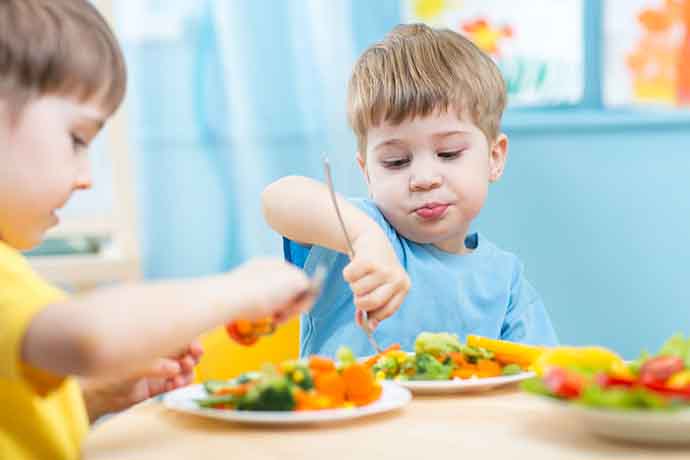
    images/external-images/5fb9f7e8e26a73f6c714cf59eec92a75.jpgChildren at Mokita kindergarten in Frankfurt will be taught the nutritional, environmental, and ethical benefits of consuming a plant-based diet.

    Frankfurt-based Mokita kindergarten will become the first vegan school in Germany when it opens in August. According to its mission statement, the school’s goal is to “provide a sustainable, full-fledged, vegetarian nutritional concept that empowers children to eat healthily and responsibly with regard to animals, fellow human beings, and the environment.” The school’s 40 children will be closely monitored by professionals to assure they are receiving all necessary nutrients. Local politicians have publicly opposed the concept of an all-vegan school on the basis that they believe children will be malnourished if they do not consume animal products. “If parents were to send their kids to a kindergarten which only provided fast food, that would be just as dangerous for them as a vegan diet,” Free Democrats party member Stefan von Wangenheim said. Data collected about the children at Mokita will be used to demonstrate that consuming a plant-based diet is safe for people of all ages. In 2015, California-based MUSE elementary school—founded by director James Cameron’s wife/vegan activist Suzy Amis Cameron—became the first all-vegan school in the United States.

    http://vegnews.com/articles/page.do?pageId=10957&catId=1
     

  • Shredded 63 Year Old Man Shares Why He Has Been Raw Vegan For 27 Years

    facebook Share on Facebook

    Shredded 63 Year Old Man Shares Why He Has Been Raw Vegan For 27 YearsI’m going to allow the interview to do the talking on this man’s incredible story, but in the meantime, I’m going to say a few things about health. And note, this isn’t meant to be a scientific rundown, but instead a look at our own life experiences for a moment and to reflect.

    Have you ever thought about the fact that our baseline for measurement as to what ‘healthy’ is may be totally out of whack? Think for a moment. Let’s say we believed vitality looked like the average human today. When we go to study those humans, what they eat, what blood pressure is like, how organs function and so forth, it is all based on the baseline understanding we generated from the testing of those average bodies.

  • Vegan-vegetarian low-protein supplemented diets in pregnant CKD patients: fifteen years of experience📎

    Abstract Title:

    Vegan-vegetarian low-protein supplemented diets in pregnant CKD patients: fifteen years of experience.

    Abstract Source:

    BMC Nephrol. 2016 Sep 20 ;17(1):132. Epub 2016 Sep 20. PMID: 27649693

    Abstract Author(s):

    Rossella Attini, Filomena Leone, Silvia Parisi, Federica Fassio, Irene Capizzi, Valentina Loi, Loredana Colla, Maura Rossetti, Martina Gerbino, Stefania Maxia, Maria Grazia Alemanno, Fosca Minelli, Ettore Piccoli, Elisabetta Versino, Marilisa Biolcati, Paolo Avagnina, Antonello Pani, Gianfranca Cabiddu, Tullia Todros, Giorgina B Piccoli

    Article Affiliation:

    Rossella Attini

    Abstract:

    BACKGROUND:Pregnancy in women with advanced CKD becoming increasingly common. However, experience with low-protein diets in CKD patients in pregnancy is still limited. Aim of this study is to review the results obtained over the last 15 years with moderately restricted low-protein diets in pregnant CKD women (combining: CKD stages 3-5, proteinuria: nephrotic at any time, or > =1 g/24 at start or referral; nephrotic in previous pregnancy). CKD patients on unrestricted diets were employed for comparison.

    METHODS:

    STUDY PERIOD:January, 2000 to September, 2015: 36 on-diet pregnancies (31 singleton deliveries, 3 twin deliveries, 1 pregnancy termination, 1 miscarriage); 47 controls (42 singleton deliveries, 5 miscarriages). The diet is basically vegan; since occasional milk and yoghurt are allowed, we defined it vegan-vegetarian; protein intake (0.6-0.8 g/Kg/day), keto-acid supplementation, protein-unrestricted meals (1-3/week) are prescribed according to CKD stage and nutritional status. Statistical analysis was performed as implemented on SPSS.

    RESULTS:Patients and controls were similar (p: ns) at baseline with regard to age (33 vs 33.5), referral week (7 vs 9), kidney function (CKD 3-5: 48.4 % vs 64.3 %); prevalence of hypertension (51.6 % vs 40.5 %) and proteinuria>3 g/24 h (16.1 % vs 12.2 %). There were more diabetic nephropathies in on-diet patients (on diet: 31.0 % vs controls 5.3 %; p 0.007 (Fisher)) while lupus nephropathies were non-significantly higher in controls (on diet: 10.3 % vs controls 23.7 %; p 0.28 (Fisher)). The incidence of preterm delivery was similar (<37 weeks: on-diet singletons 77.4 %; controls: 71.4 %). The incidence of other adverse pregnancy related outcomes was non-significantly lower in on-diet patients (early preterm delivery: on diet: 32.3 % vs controls 35.7 %; birth-weight = <1.500 g: on diet: 9.7 % vs controls 23.8 %). None of the singletons in the on-diet series died, while two perinatal deaths occurred among the controls (p = 0.505). The incidence of small for gestational age (SGA<10th centile) and/or extremely preterm babies (<28th week) was significantly lower in singletons from on-diet mothers than in controls (on diet: 12.9 % vs controls: 33.3 %; p: 0.04 (Fisher)).

    CONCLUSION:Moderate protein restriction in the context of a vegan-vegetarian supplemented diet is confirmed as a safe option in the management of pregnant CKD patients.

  • Vegetables reduce blood pressure levels

    facebook Share on Facebook
    Vegetables reduce blood pressure levels image

    A plant-based diet—fruits, vegetables, legumes such as peas and beans, nuts and seeds—reduces your blood pressure naturally, even if you're also eating meat and dairy.

    One of the heart-specific diets, called DASH, had the biggest impact on blood pressure, reducing levels by 8.74/6.05 mmHg compared to the normal diet. This drop would translate into a 14 percent reduction in strokes and a 9 percent fall in heart attacks.

We use cookies on our website. Some of them are essential for the operation of the site, while others help us to improve this site and the user experience (tracking cookies). You can decide for yourself whether you want to allow cookies or not. Please note that if you reject them, you may not be able to use all the functionalities of the site.