CYBERMED LIFE - ORGANIC  & NATURAL LIVING
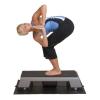
Whole-Body Vibration

Whole body vibration (WBV) is a generic term used when vibrations (mechanical oscillations) of any frequency are transferred to the human body. Humans are exposed to vibration through a contact surface that is in a mechanical vibrating state. Human's are generally exposed to many different forms of vibration in their daily lives. This could be a driver's seat, a moving train platform, through a power tool, a training platform, or one of countless other devices. It is a potential form of occupational hazard, particularly after years of exposure.

When high frequency vibrations (above 50 Hz) enter though the hands, occupational safety concerns may arise. For example, when working with a jackhammer and the development of vibration white finger. Exposures and limits have been estimated in the ISO 5349-1 for hand-transmitted vibration.

Whole body vibration training as a form of physical exercise can offer some fitness and health benefits, but it is not clear if it is as beneficial as regular physical exercise. A review in 2014 came to the conclusion that there is little and inconsistent evidence that acute and/or chronic whole body vibration could improve the performance of competitive and/or elite athletes.


  • Whole-Body Vibration

  • Whole-Body Vibration

    Whole body vibration (WBV) is a generic term used when vibrations (mechanical oscillations) of any frequency are transferred to the human body. Humans are exposed to vibration through a contact surface that is in a mechanical vibrating state. Human's are generally exposed to many different forms of vibration in their daily lives. This could be a driver's seat, a moving train platform, through a power tool, a training platform, or one of countless other devices. It is a potential form of occupational hazard, particularly after years of exposure.

    When high frequency vibrations (above 50 Hz) enter though the hands, occupational safety concerns may arise. For example, when working with a jackhammer and the development of vibration white finger. Exposures and limits have been estimated in the ISO 5349-1 for hand-transmitted vibration.

    Whole body vibration training as a form of physical exercise can offer some fitness and health benefits, but it is not clear if it is as beneficial as regular physical exercise. A review in 2014 came to the conclusion that there is little and inconsistent evidence that acute and/or chronic whole body vibration could improve the performance of competitive and/or elite athletes.

  • Whole-Body Vibration Combined with Treadmill Training Improves Walking Performance in Post-Stroke Patients: A Randomized Controlled Trial📎

    facebook Share on Facebook
    Abstract Title:

    Whole-Body Vibration Combined with Treadmill Training Improves Walking Performance in Post-Stroke Patients: A Randomized Controlled Trial.

    Abstract Source:

    Med Sci Monit. 2017 Oct 14 ;23:4918-4925. Epub 2017 Oct 14. PMID: 29031023

    Abstract Author(s):

    Wonjae Choi, Donghun Han, Junesun Kim, Seungwon Lee

    Article Affiliation:

    Wonjae Choi

    Abstract:

    BACKGROUND Stroke is characterized by an asymmetrical gait pattern that causes poor stability and reduces overall activity levels. The aim of this study was to investigate the effect of whole-body vibration combined with treadmill training (WBV-TT) on walking performance in patients with chronic stroke.

    MATERIAL AND METHODS Thirty ambulatory chronic stroke patients were randomly allocated to the WBV-TT group or the treadmill training (TT) group. The participants in the WBV-TT group performed 6 types of exercises on a vibrating platform for 4.5 minutes and then walked on the treadmill for 20 minutes. The participants in the TT group conducted the same exercise on a platform without vibration and then walked on the treadmill in the same manner. The vibration lasted for 45 seconds in each exercise, and the intervention was performed 3 times weekly for 6 weeks. The treadmill walking speed was gradually increased by 5% in both groups. The outcome measures included the temporospatial parameter of gait (GAITRite®) and 6-minute walk test.

    RESULTS The WBV-TT group showed significant improvements in walking performance with respect to walking speed, cadence, step length, stride length, single-limb support, double-limb support, and 6-minute walk test compared with baseline (p<0.05). Significant improvements were also seen in walking speed, step length, stride length, and double-limb support compared with the TT group (p<0.05).

    CONCLUSIONS These findings indicate that WBV-TT is more effective than TT for improving walking performance of patients with chronic stroke.

  • WHOLE-BODY VIBRATION EXERCISE IS WELL TOLERATED IN PATIENTS WITH DUCHENNE MUSCULAR DYSTROPHY: A SYSTEMATIC REVIEW. 📎

    facebook Share on Facebook
    Abstract Title:

    WHOLE-BODY VIBRATION EXERCISE IS WELL TOLERATED IN PATIENTS WITH DUCHENNE MUSCULAR DYSTROPHY: A SYSTEMATIC REVIEW.

    Abstract Source:

    Afr J Tradit Complement Altern Med. 2017 ;14(4 Suppl):2-10. Epub 2017 Jul 7. PMID: 28740938

    Abstract Author(s):

    Eloá Moreira-Marconi, Danubia C Sá-Caputo, Carla F Dionello, Eliane O Guedes-Aguiar, Cintia R Sousa-Gonçalves, Danielle S Morel, Laisa L Paineiras-Domingos, Patricia L Souza, Cristiane R Kütter, Rebeca G Costa-Cavalcanti, Glenda Costa, Patricia C Paiva, Claudia Figueiredo, Samuel Brandão-Sobrinho-Neto, Christina Stark, Marianne Unger, Mario Bernardo-Filho

    Article Affiliation:

    Eloá Moreira-Marconi

    Abstract:

    BACKGROUND:Duchenne muscular dystrophy (DMD) is caused by a defective gene located on the X-chromosome, responsible for the production of the dystrophin protein. Complications in the musculoskeletal system have been previously described in DMD patients. Whole body vibration exercise (WBVE) is a treatment that improves musculoskeletal function in movement disorders. The aim of this study was to review the effects of WBVE on functional mobility, bone and muscle in DMD patients.

    MATERIALS AND METHODS:Four databases were searched. Three eligible studies were found; all three conclude the management of DMD patients with WBV was clinically well tolerated. The studies used a side-alternating WBV system, frequencies 7 - 24 Hz; and amplitudes 2 - 4 mm.

    RESULTS:A work indicates that a temporary increase in creatine kinase in DMD during the first days of WBV was observed, but other authors did not find changes. No significant changes in bone mass, muscle strength or bone markers. Some patients reported subjective functional improvement during training. Interpretation.

    CONCLUSION:It is concluded that WBV seems to be a feasible and well tolerated exercise modality in DMD patients.

  • Whole-Body Vibration Exercise Therapy Improves Cardiac Autonomic Function and Blood Pressure in Obese Pre- and Stage 1 Hypertensive Postmenopausal Women.

    facebook Share on Facebook
    Abstract Title:

    Whole-Body Vibration Exercise Therapy Improves Cardiac Autonomic Function and Blood Pressure in Obese Pre- and Stage 1 Hypertensive Postmenopausal Women.

    Abstract Source:

    J Altern Complement Med. 2016 Dec ;22(12):970-976. Epub 2016 Sep 22. PMID: 27656953

    Abstract Author(s):

    Alexei Wong, Stacey Alvarez-Alvarado, Amber W Kinsey, Arturo Figueroa

    Article Affiliation:

    Alexei Wong

    Abstract:

    OBJECTIVE:Whole-body vibration (WBV) is an unconventional exercise therapy that appears to provide the same benefits of resistance training in postmenopausal women while being more safe and gentle on the joints. This study evaluated the effect of an 8-week WBV exercise regimen on heart rate variability (HRV) and blood pressure (BP) in obese postmenopausal women.

    DESIGN:Randomized controlled study with two parallel groups.

    PARTICIPANTS:Twenty-five (age 50-65 years) obese (body-mass index>30 and<40 kg/m(2)) postmenopausal women.

    INTERVENTION:Participants were randomly assigned to a WBV training group or nonexercising control group. Participants in the WBV group completed the supervised training 3 times a week. WBV training consisted of four static and four dynamic leg exercises (normal, high, and wide-stance squats and calf-raises) with vertical vibration (25-40 Hz and low-high amplitude) progressed throughout the 8 weeks.

    OUTCOME MEASURES:Brachial systolic BP (SBP) and diastolic BP (DBP) and HRV: sympathovagal balance (natural logarithm of low frequency [LnLF]/natural logarithm of high frequency [LnHF]; normalized low frequency [nLF]/normalized high frequency [nHF]), parasympathetic tone (LnHF, nHF, natural logarithm of root mean square of successive differences [LnRMSSD]), sympathetic tone (LnLF, nLF), natural logarithm of total power, and heart rate (HR).

    RESULTS:There were significant group × time interactions (p < 0.05) for brachial SBP, DBP, LnLF/LnHF, and nLF/nHF that significantly decreased (p < 0.01) after WBV, compared with no changes after control. There was a significant (p < 0.05) increase in nHF and decrease in nLF in the WBV group compared with baseline, yet the changes were not different than those in the control group. No significant changes were observed in LnTP, LnLF, LnHF, LnRMSSD, or HR after 8 weeks in either group.

    CONCLUSIONS:WBV training for 8 weeks is an adequate unconventional exercise intervention for improving sympathovagal balance and BP in previously sedentary obese postmenopausal women.

  • Whole-body vibration mimics the metabolic effects of exercise in male leptin receptor deficient mice. 📎

    facebook Share on Facebook
    Abstract Title:

    Whole-body vibration mimics the metabolic effects of exercise in male leptin receptor deficient mice.

    Abstract Source:

    Endocrinology. 2017 Mar 15. Epub 2017 Mar 15. PMID: 28323991

    Abstract Author(s):

    Meghan E McGee-Lawrence, Karl H Wenger, Sudipta Misra, Catherine L Davis, Norman K Pollock, Mohammed Elsalanty, Kehong Ding, Carlos M Isales, Mark W Hamrick, Joanna R Erion, Marlena Wosiski-Kuhn, Phonepasong Arounleut, Mark P Mattson, Roy G Cutler, Jack C Yu, Alexis M Stranahan

    Article Affiliation:

    Meghan E McGee-Lawrence

    Abstract:

    Whole-body vibration has gained attention as a potential exercise mimetic, but direct comparisons with the metabolic effects of exercise are scarce. To determine whether whole-body vibration recapitulates the metabolic and osteogenic effects of physical activity, we exposed male wildtype (Wt) and leptin receptor deficient (db/db) mice to daily treadmill exercise or whole-body vibration for three months. Body weights were analyzed and compared with Wt and db/db mice that remained sedentary. Glucose and insulin tolerance testing revealed comparable attenuation of hyperglycemia and insulin resistance in db/db mice following treadmill exercise or whole-body vibration. Both interventions reduced body weight in db/db mice and normalized muscle fiber diameter. Treadmill exercise and whole-body vibration also attenuated adipocyte hypertrophy in visceral adipose tissue and reduced hepatic lipid content in db/db mice. Although the effects of leptin receptor deficiency on cortical bone structure were not eliminated by either intervention, exercise and whole-body vibration increased circulating levels of osteocalcin in db/db mice. In the context of increased serum osteocalcin, the modest effects of TE and WBV on bone geometry, mineralization, and biomechanics may reflect subtle increases in osteoblast activity in multiple areas of the skeleton. Taken together, these observations indicate that whole-body vibration recapitulates the effects of exercise on metabolism in type 2 diabetes.

  • Whole-body vibration training as a workplace-based sports activity for employees with chronic low-back pain.

    facebook Share on Facebook
    Abstract Title:

    Whole-body vibration training as a workplace-based sports activity for employees with chronic low-back pain.

    Abstract Source:

    Scand J Med Sci Sports. 2017 Feb 10. Epub 2017 Feb 10. PMID: 28185300

    Abstract Author(s):

    Tobias S Kaeding, Annika Karch, Rebecca Schwarz, Tatjana Flor, Torge-Christian Wittke, Momme Kück, Georg Böselt, Uwe Tegtbur, Lothar Stein

    Article Affiliation:

    Tobias S Kaeding

    Abstract:

    INTRODUCTION:The goal of this randomized and controlled study is to examine whether whole-body vibration (WBV) training is able to reduce back pain and physical disability in seated working office employees with chronic low-back pain in a real-world setting.

    MATERIALS AND METHODS:A total of 41 subjects (68.3% female/mean age 45.5± 9.1 years/mean BMI 26.6 ± 5.2) were randomly allocated to an intervention group (INT (n= 21)) or a control group (CON (n=20). The INT participated in WBV training 2.5 times per week for 3 months. The primary outcome was the change in the Roland and Morris disability questionnaire (RMQ) score over the study period. In addition, secondary outcomes included changes in the Oswestry Disability Index (ODI), the Work-Ability-Index Questionnaire (WAI), the quality of life questionnaire SF-36, the Freiburger activity questionnaire and an isokinetic test of the musculature of the trunk.

    RESULTS:Compliance with the intervention in the INT reached a mean of 81.1%± 31.2% with no long-lasting unwanted side effects. We found significant positive effects of 3 months of WBV training in the INT compared to the CON regarding the RMQ (p=0.027), the ODI (p=0.002), the SF-36 (p=0.013), the Freiburger activity questionnaire (p=0.022), the post-interventional sick leave in the INT (p=0.008) and trends regarding a positive effect of the intervention on the muscular capacity of the muscles of the trunk in flexion.

    CONCLUSIONS:WBV training seems to be an effective, safe and suitable intervention for seated working employees with chronic low-back pain. This article is protected by copyright. All rights reserved.

  • Whole-body vibration training decreases ankle systolic blood pressure and leg arterial stiffness in obese postmenopausal women with high blood pressure.

    facebook Share on Facebook
    Abstract Title:

    Whole-body vibration training decreases ankle systolic blood pressure and leg arterial stiffness in obese postmenopausal women with high blood pressure.

    Abstract Source:

    Menopause. 2015 Apr ;22(4):423-7. PMID: 25225715

    Abstract Author(s):

    Arturo Figueroa, Roy Kalfon, Alexei Wong

    Article Affiliation:

    Arturo Figueroa

    Abstract:

    OBJECTIVE:High ankle systolic blood pressure (SBP;≥175 mm Hg) is associated with arterial stiffness (pulse wave velocity [PWV]) and cardiac events. This study aims to investigate the effects of whole-body vibration (WBV) training on ankle SBP and its associations with changes in PWV and aortic SBP in postmenopausal women.

    METHODS:Thirty-six postmenopausal women were randomized to a control group (n = 12) or a WBV training group (3 d/wk) that was stratified by ankle SBP into WBV-high (n = 12) and WBV-normal (n = 12). Ankle SBP, brachial SBP, aortic SBP, femoral-ankle PWV (legPWV), carotid-femoral PWV, and brachial-ankle PWV (baPWV) were examined before and after 12 weeks.

    RESULTS:Baseline ankle SBP was higher (P<0.05) in the WBV-high group compared with the WBV-normal group. WBV-high reduced mean (SEM) ankle SBP (-24 [7] mm Hg, P<0.05) compared with WBV-normal and control. Both WBV groups decreased (P<0.05) mean (SEM) brachial SBP (-11 [2] mm Hg), aortic SBP (-11 [3] mm Hg), legPWV (-0.80 [0.17] m/s), and baPWV (-1.18 [0.27] m/s) compared with the control group. Reductions in legPWV were correlated (P<0.05) with decreases in ankle SBP (r = 0.43), brachial SBP (r = 0.42), aortic SBP (r = 0.42), and baPWV (r = 0.75).

    CONCLUSIONS:WBV training decreases ankle SBP in postmenopausal women with high ankle SBP. WBV training reduces aortic SBP, legPWV, and baPWV, but not carotid-femoral PWV, in postmenopausal women independently of ankle SBP. Therefore, reductions in peripheral and central SBP induced by WBV training are explained by a reduction in peripheral PWV.

  • Whole-body vibration training improves balance control and sit-to-stand performance among middle-aged and older adults: a pilot randomized controlled trial. 📎

    facebook Share on Facebook
    Abstract Title:

    Whole-body vibration training improves balance control and sit-to-stand performance among middle-aged and older adults: a pilot randomized controlled trial.

    Abstract Source:

    Eur Rev Aging Phys Act. 2017 ;14:11. Epub 2017 Jul 18. PMID: 28729887

    Abstract Author(s):

    Ming-Chen Ko, Long-Shan Wu, Sangwoo Lee, Chien-Chun Wang, Po-Fu Lee, Ching-Yu Tseng, Chien-Chang Ho

    Article Affiliation:

    Ming-Chen Ko

    Abstract:

    BACKGROUND:Aging is associated with decreased balance, which increases falling risk. The objective of the current study was to determine the feasibility and effects of whole-body vibration (WBV) training on knee extensor muscle power, limits of stability, and sit-to-stand performance among community-dwelling middle-aged and older adults in the United States.

    METHODS:A randomized pilot study with participant blinding was conducted. Feasibility outcomes included recruitment and compliance rate. Twenty-nine community-dwelling older adults were randomly assigned to perform body-weight exercises with either an individualized vibration frequency and amplitude, a fixed vibration frequency and amplitude, or no vibration. Isokinetic knee extensor power, limits of stability, and sit-to-stand tests were conducted before beginning the exercises (baseline) and after 8 weeks of training.

    RESULTS:With a favorable recruitment rate (58%) and compliance rates (attrition 9%; adherence 85%), the intervention was deemed feasible. The limits of stability endpoint excursion score for the individualized frequency-amplitude group was increased by 8.8 (12.9%; P = 0.025) after training, and that group's maximum excursion score was increased by 9.2 (11.5%; P = 0.006) after training. The average weight transfer time score was significantly decreased by 0.2 s in the fixed group. The participants in the individualized group demonstrated a significant increase (3.2%) in weight rising index score after 8 weeks of WBV training.

    CONCLUSIONS:WBV training is feasible for use with elderly people, and this study achieved good recruitment and compliance. The present paper suggests that 8 weeks of WBV training improves limits of stability and sit-to-stand performance. Future studies must determine whether WBV training improves other factors that affect posture control.

    TRIAL REGISTRATION:This study was registered at the Texas Woman's University Institutional Review Board [TWU IRB 17632] on the 3rd of November 2014.

  • Whole-Body Vibration Training Improves Heart Rate Variability and Body Fat Percentage in Obese Hispanic Postmenopausal Women.

    facebook Share on Facebook
    Abstract Title:

    Whole-Body Vibration Training Improves Heart Rate Variability and Body Fat Percentage in Obese Hispanic Postmenopausal Women.

    Abstract Source:

    J Aging Phys Act. 2016 Dec 5:1-25. Epub 2016 Dec 5. PMID: 27918705

    Abstract Author(s):

    Gregory Severino, Marcos Sanchez-Gonzalez, Michelle Walters-Edwards, Michael Nordvall, Oksana Chernykh, Jason Adames, Alexei Wong

    Article Affiliation:

    Gregory Severino

    Abstract:

    The present study examined the effects of a 6-week whole body vibration training (WBVT) regimen on heart rate variability (HRV) and body composition in obese Hispanic postmenopausal women. Participants were randomly assigned to either WBVT (n=13) or non-exercising control group (n=14). HRV and body composition were measured before and after 6 weeks. There was a significant group x time interaction (P<0.05) for heart rate, sympathovagal balance and body fat percentage (BF%) such that all significantly decreased (P<0.05); and R-R intervals which significant increased (P<0.05) following WBVT compared to no changes after control. The changes in sympathovagal balance were correlated with changes in BF% (r=0.63, P<0.05). Our findings indicate that WBVT improves HRV and BF% in obese Hispanic postmenopausal women. The improvement in BF% partially explained the decrease in sympathovagal balance. Since obese and older individuals are at increased risk of developing cardiovascular diseases, they could potentially benefit from WBVT.

  • Whole-body vibration training increases physical measures and quality of life without altering inflammatory-oxidative biomarkers in patients with moderate COPD.

    facebook Share on Facebook
    Abstract Title:

    Whole-body vibration training increases physical measures and quality of life without altering inflammatory-oxidative biomarkers in patients with moderate COPD.

    Abstract Source:

    J Appl Physiol (1985). 2018 May 3. Epub 2018 May 3. PMID: 29722619

    Abstract Author(s):

    Camila Danielle Cunha Neves, Ana Cristina Rodrigues Lacerda, Vanessa Kelly Silva Lage, Aline Alves Soares, Maria Gabriela Abreu Chaves, Liliana Pereira Lima, Thyago José Silva, Érica Leandro Marciano Vieira, Antônio Lúcio Teixeira, Hércules Ribeiro Leite, Mariana Aguiar Matos, Vanessa Amaral Mendonça

    Article Affiliation:

    Camila Danielle Cunha Neves

    Abstract:

    The whole-body vibration training (WBVT) has been identified as an alternative intervention to improve exercise capacity and quality of life of patients with Chronic Obstructive Pulmonary Disease (COPD). However, the effect of WBVT on inflammatory-oxidative biomarkers remains unknown. The aim of this trial was to investigate the effects of WBVT on quality of life and physical and inflammatory-oxidative parameters in patients with COPD. Twenty patients were equally divided into: 1) intervention group (IG) that performed the WBVT, and 2) control group (CG) that did not receive any intervention. Intervention consisted in performing static squatting on vibrating platform, in six series of 30 seconds, 3 d.wk, for 12 weeks. Patients were evaluated for: plasma levels of IL-6, IL-8, IFN-ɣ, soluble receptors of TNF-α; white cells count; plasma levels of oxidant and antioxidant markers; the 6-minute walking distance (6MWD); peak oxygen uptake (VOpeak); handgrip strength; quality of life; timed 5-chair sit-to-stand (5STS) and timed get-up and go test (TUG). After WBVT, patients from IG showed significant increase in the 6MWD, VOpeak and handgrip strength (p<0.05). Furthermore, patients from IG reached minimal clinically important difference regarding quality of life. No significant differences were found in 5STS, TUG, inflammatory-oxidative biomarkers and white cells count in the IG. CG did not show significant improvement in all assessments (p>0.05). Taking together, our results demonstrated that the WBVT induced clinically significant benefits regarding exercise capacity, muscle strength and quality of life in patients with COPD, that were not related to inflammatory-oxidative biomarkers changes.

We use cookies on our website. Some of them are essential for the operation of the site, while others help us to improve this site and the user experience (tracking cookies). You can decide for yourself whether you want to allow cookies or not. Please note that if you reject them, you may not be able to use all the functionalities of the site.